Buy myalbania.eu ?
We are moving the project
myalbania.eu .
Are you interested in purchasing the domain
myalbania.eu ?
domain@kv-gmbh.de · 0541-91531010
Buy myalbania.eu ?
Is this relation antisymmetric?
Yes, a relation is antisymmetric if for all elements a and b in the relation, if (a, b) and (b, a) are both in the relation, then a must equal b. In other words, if there is a pair of distinct elements where both are related to each other, then the relation is not antisymmetric. **
Why should the less-than-or-equal relation be antisymmetric? It is only antisymmetric when all tuples are equal.
The less-than-or-equal relation should be antisymmetric because it represents a partial ordering where elements can be compared in terms of their magnitude. If the relation were not antisymmetric, it would violate the property that if a ≤ b and b ≤ a, then a = b. This would lead to inconsistencies in the ordering of elements. Therefore, in order for the less-than-or-equal relation to accurately represent a partial ordering, it must be antisymmetric, ensuring that no two distinct elements can be less than or equal to each other simultaneously. **


Similar search terms for Antisymmetric
Top-Angebote
Products related to Antisymmetric:
-
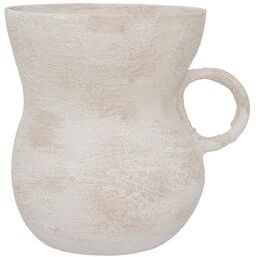
Urban Nature Culture Vase RelaxedQuiet elegancy comes to life in Urban Nature Culture's vase Relaxed. Handmade in Portugal, this ceramic vase has a shape beyond anything you've seen - it's organic, it flows and steals your heart with its playful ear.123,40 $*Shipping: 0,00 $Secure redirect to the provider
-
Urban Nature Culture Vase Ace - AceSetting forth a tradition that is centuries old, pottery has ever been one of Portugal's trades. Urban Nature Culture loves to work with Portuguese artisans - who use their skills to combine modern looks and contemporary design with techniques of old.145,60 $*Shipping: 0,00 $Secure redirect to the provider



-
What is the difference between symmetric and antisymmetric?
Symmetric and antisymmetric are two types of relationships that can exist between elements in a set. In a symmetric relationship, if element A is related to element B, then element B is also related to element A. This means the relationship is bidirectional. In contrast, in an antisymmetric relationship, if element A is related to element B, then element B cannot be related to element A. This means the relationship is unidirectional and does not allow for both elements to be related to each other simultaneously. **
-
What is a relation that is symmetric but not antisymmetric?
A relation that is symmetric but not antisymmetric is a relation where if (a, b) is in the relation, then (b, a) is also in the relation, but it is not necessarily the case that a = b. In other words, the relation is reflexive and symmetric, but not antisymmetric. An example of such a relation is the "is a sibling of" relation. If person A is a sibling of person B, then person B is also a sibling of person A, but it is not necessarily the case that person A and person B are the same person. **
-
What is the definition of a relation that is antisymmetric and transitive, but not reflexive?
A relation that is antisymmetric and transitive, but not reflexive is a relation where if (a, b) is in the relation, and (b, a) is also in the relation, then a must equal b. Additionally, if (a, b) and (b, c) are in the relation, then (a, c) must also be in the relation. However, it does not require that every element is related to itself. In other words, it does not necessarily have the property that for every element a, (a, a) is in the relation. **
-
Is man a creature of nature or culture, or is culture the nature of man?
Man is a complex being influenced by both nature and culture. While humans are inherently part of the natural world, our behaviors, beliefs, and practices are largely shaped by the societies we live in. Culture can be seen as the nature of man in the sense that it is a fundamental aspect of human existence, shaping our identities and interactions with the world. Ultimately, the relationship between nature and culture is intertwined in shaping the essence of humanity. **


Is man a being of nature or culture, or is culture the nature of man?
Man is a being of both nature and culture. While humans are inherently a part of the natural world, our ability to create and participate in culture sets us apart from other species. Culture shapes our beliefs, behaviors, and interactions with the world, becoming an essential part of our identity. Therefore, culture can be seen as the nature of man, as it influences and defines our existence in profound ways. **
Is culture a form of nature?
Culture is not a form of nature, but rather a product of human society. While culture can be influenced by nature and the environment, it is distinct in that it is created, shared, and passed down through generations by humans. Nature refers to the physical world and natural phenomena, while culture encompasses the beliefs, customs, arts, and social behaviors of a particular group of people. **
Top-Angebote
Products related to Antisymmetric:
-
From the Archives: Black History and Culture Value PackThis brand-new series is rooted in a profound commitment to shedding light on some of the important -- and often lesser-known -- aspects of Black history. From the Archives features landmarks, events, people, and artistic endeavors that have played...26,99 $*Shipping: 0,00 $Secure redirect to the provider
-
Urban Nature Culture Vase RelaxedQuiet elegancy comes to life in Urban Nature Culture's vase Relaxed. Handmade in Portugal, this ceramic vase has a shape beyond anything you've seen - it's organic, it flows and steals your heart with its playful ear.123,40 $*Shipping: 0,00 $Secure redirect to the provider
-
Is this relation antisymmetric?
Yes, a relation is antisymmetric if for all elements a and b in the relation, if (a, b) and (b, a) are both in the relation, then a must equal b. In other words, if there is a pair of distinct elements where both are related to each other, then the relation is not antisymmetric. **
-
Why should the less-than-or-equal relation be antisymmetric? It is only antisymmetric when all tuples are equal.
The less-than-or-equal relation should be antisymmetric because it represents a partial ordering where elements can be compared in terms of their magnitude. If the relation were not antisymmetric, it would violate the property that if a ≤ b and b ≤ a, then a = b. This would lead to inconsistencies in the ordering of elements. Therefore, in order for the less-than-or-equal relation to accurately represent a partial ordering, it must be antisymmetric, ensuring that no two distinct elements can be less than or equal to each other simultaneously. **
-
What is the difference between symmetric and antisymmetric?
Symmetric and antisymmetric are two types of relationships that can exist between elements in a set. In a symmetric relationship, if element A is related to element B, then element B is also related to element A. This means the relationship is bidirectional. In contrast, in an antisymmetric relationship, if element A is related to element B, then element B cannot be related to element A. This means the relationship is unidirectional and does not allow for both elements to be related to each other simultaneously. **
-
What is a relation that is symmetric but not antisymmetric?
A relation that is symmetric but not antisymmetric is a relation where if (a, b) is in the relation, then (b, a) is also in the relation, but it is not necessarily the case that a = b. In other words, the relation is reflexive and symmetric, but not antisymmetric. An example of such a relation is the "is a sibling of" relation. If person A is a sibling of person B, then person B is also a sibling of person A, but it is not necessarily the case that person A and person B are the same person. **
Similar search terms for Antisymmetric
-
Urban Nature Culture Vase Ace - AceSetting forth a tradition that is centuries old, pottery has ever been one of Portugal's trades. Urban Nature Culture loves to work with Portuguese artisans - who use their skills to combine modern looks and contemporary design with techniques of old.145,60 $*Shipping: 0,00 $Secure redirect to the provider
-
Urban Nature Culture Vase Talvi - WhiteFloating the sea waves, a sense of calm takes over, feeling at home in the world. That same feeling we get at home, like a safe haven to relax our senses and feast our eyes on our most cherished things.267,80 $*Shipping: 0,00 $Secure redirect to the provider
-
What is the definition of a relation that is antisymmetric and transitive, but not reflexive?
A relation that is antisymmetric and transitive, but not reflexive is a relation where if (a, b) is in the relation, and (b, a) is also in the relation, then a must equal b. Additionally, if (a, b) and (b, c) are in the relation, then (a, c) must also be in the relation. However, it does not require that every element is related to itself. In other words, it does not necessarily have the property that for every element a, (a, a) is in the relation. **
-
Is man a creature of nature or culture, or is culture the nature of man?
Man is a complex being influenced by both nature and culture. While humans are inherently part of the natural world, our behaviors, beliefs, and practices are largely shaped by the societies we live in. Culture can be seen as the nature of man in the sense that it is a fundamental aspect of human existence, shaping our identities and interactions with the world. Ultimately, the relationship between nature and culture is intertwined in shaping the essence of humanity. **
-
Is man a being of nature or culture, or is culture the nature of man?
Man is a being of both nature and culture. While humans are inherently a part of the natural world, our ability to create and participate in culture sets us apart from other species. Culture shapes our beliefs, behaviors, and interactions with the world, becoming an essential part of our identity. Therefore, culture can be seen as the nature of man, as it influences and defines our existence in profound ways. **
-
Is culture a form of nature?
Culture is not a form of nature, but rather a product of human society. While culture can be influenced by nature and the environment, it is distinct in that it is created, shared, and passed down through generations by humans. Nature refers to the physical world and natural phenomena, while culture encompasses the beliefs, customs, arts, and social behaviors of a particular group of people. **
* All prices are inclusive of VAT and, if applicable, plus shipping costs. The offer information is based on the details provided by the respective shop and is updated through automated processes. Real-time updates do not occur, so deviations can occur in individual cases. ** Note: Parts of this content were created by AI.