Buy myalbania.eu ?
We are moving the project
myalbania.eu .
Are you interested in purchasing the domain
myalbania.eu ?
domain@kv-gmbh.de · 0541-91531010
Buy myalbania.eu ?
What are electricity and high culture history?
Electricity history refers to the development and use of electricity as a form of energy, including the discovery of electricity, the invention of electric devices, and the establishment of electrical systems. High culture history, on the other hand, refers to the history of cultural and artistic achievements that are considered to be of high quality and sophistication, such as classical music, literature, fine arts, and theater. Both electricity and high culture history have evolved over time, shaping the way we live and appreciate the world around us. **
What is the constructive nature of history?
The constructive nature of history refers to the way in which our understanding and interpretation of historical events and figures can shape our present and future. By studying history, we can learn from past mistakes and successes, and use that knowledge to build a better future. History also helps us understand the complexities of human societies and the interconnectedness of different cultures and civilizations. Ultimately, the constructive nature of history lies in its ability to provide valuable lessons and insights that can inform our decisions and actions in the present and future. **
Similar search terms for Usborne-Beginners-History-10
Top-Angebote
Products related to Usborne-Beginners-History-10:
-
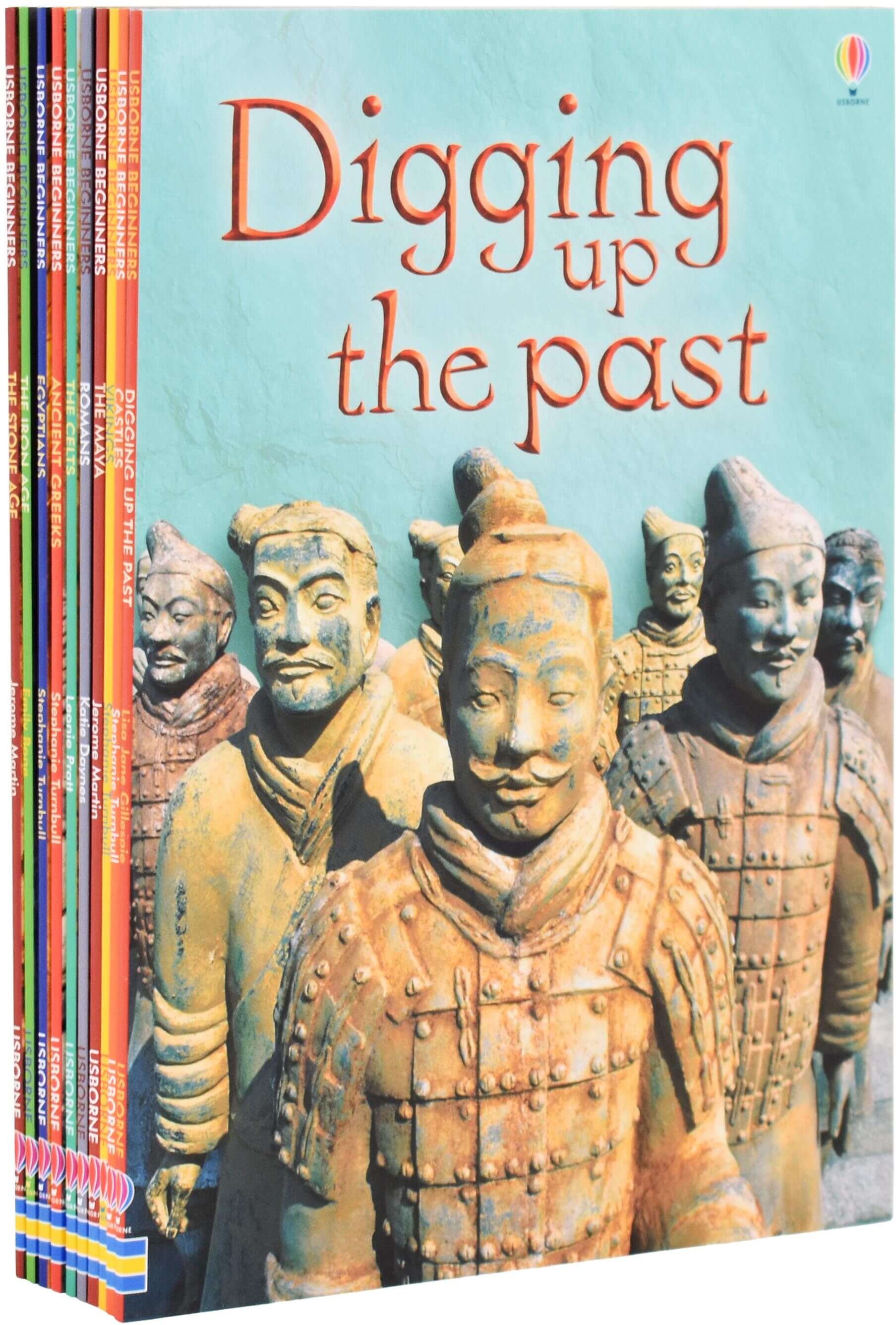
Usborne Beginners History 10 Books Collection Set - Ages 4-7 - Paperback Usborne Publishing LtdSummary Usborne Beginners History is a top value collection containing ten easy-to-read books about the people and places of the past. Every page is packed with full-colour illustrations and is written specifically for children aged 5-7 learning to read. It’s developed in consultation with reading experts, so you can be confident that these books are suitable for your kid. History is one of the most fascinating subjects, but it can also be hard to get into. It’s not just about dates and battles; history is full of everyday people who did extraordinary things. Even though we know that history isn’t dull, sometimes it can seem a little too big or complicated to enjoy learning about. Usborne Beginners History is a fantastic collection that brings together exciting stories in an easy-to-understand way with lots of fun illustrations on every page. They've been specially designed for children who want to find out more about the past without having to read long chapters or heavy books. Your child will love exploring history through these fun, easy-to-read books. They’ll learn about famous figures from the past, how life used to be lived long ago, what happened at different times in history – all while they develop their reading skills. There are even glossaries at the back of each book so you can make sure you’ve learnt all the new vocabulary correctly. It’s another wonderful product from the trusted children’s publisher Usborne. If you’re looking for more non-fiction to add to your collection at home, make sure to check out our full Usborne Beginners range for books on nature, science and more everyday topics. If it’s fiction you’re after, make sure you look at the Usborne Reading Programme, which is designed to help kids grow from reading simple stories to more complex narratives. What’s in the collection? There are an incredible ten books included, written by a combination of Usborne’s regular authors. They cover a wide range of periods, from the Stone Age up to Medieval times. They also cover African, European and Central American civilisations for the most comprehensive overview. In Ancient Greeks, you can find out more about Greek gods and heroes, what Greeks liked to do for fun, and all about their favourite foods. You can find out all about Castles, the people who lived in them, and why they stand in ruins. Discover how The Celts were fighters, craftspeople, and tale-tellers. Digging Up the Past shows how history is uncovered, a shovel and a trowel at a time. Learn how the Egyptians made mummies, buried their treasure under pyramids, and farmed on the banks of the River Nile. Find out how people lived, died, created and worshipped in The Iron Age. Journey to Central America to meet The Maya, who built towering temples, lived in stone cities and fought in the jungle. Uncover how the Romans built the modern world but lived and worshipped very differently from us. The Stone Age rocks! Learn all about farming, tools, making shelters, and catching...14,99 £*Shipping: 2,99 £Secure redirect to the provider
-
Usborne Beginners History 10 Books Collection Box Set Educational History Books for Children - Stone Age Iron Age - HARDCOVERUsborne Beginners History 10 Books Collection Box Set Stone Age Iron Age Egyptians Ancient Greeks .. Stone Age This simple information book follows the history of Stone Age people and how they lived. Iron Age This simple information book charts the history of Iron Age people and how they lived; including their farming methods; the gods they prayed to and the hill forts where they lived. Egyptians Who were the ancient Egyptians? Why did they build pyramids and how were mummies made? Ancient Greeks Find out about Ancient Greece; what people wore; ate and did for fun and learn about some of the most famous philosophers and mathematicians of the age in this compelling book for beginner readers. Celts Who were the Celts exactly? Did you know they lived on top of hills? Do you have any idea how Celtic warriors made themselves look really scary in battle? Romans Who were the ancient Romans? Where did they go to eat; shop and wash? What did they do for fun? The Maya Who were the Maya? Where did they live? Why did they build tall stone temples? Vikings Find out what it was like to be a Viking; and learn about Viking homes; feasts; boats; gods and much more in this fascinating book. Castles Who lived in a castle; and what was it like? Children can find out the answers to these questions and lots more about the wonderful world of castles in this informative book. Digging Up the Past How do ancient things get buried? Who digs them up? And what do they find? Beginner readers can find answers to these questions and more in this colourful information book. Related Tags: Usborne, Usbourne14,99 £*Shipping: 2,99 £Secure redirect to the provider
-
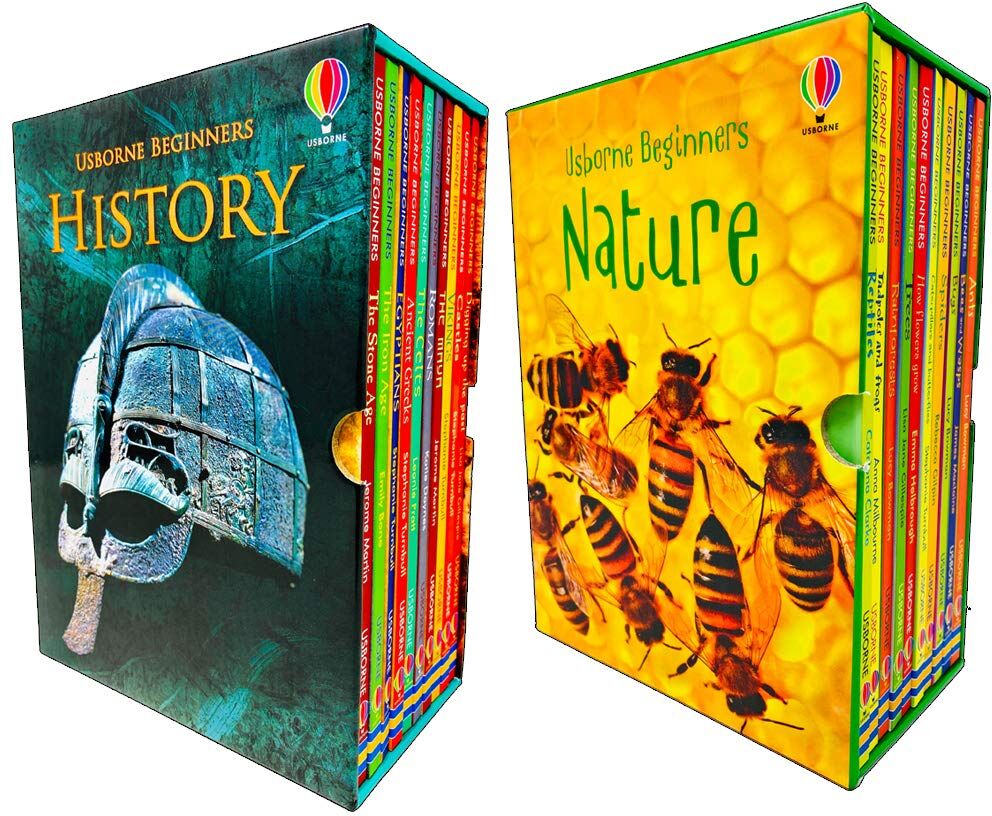
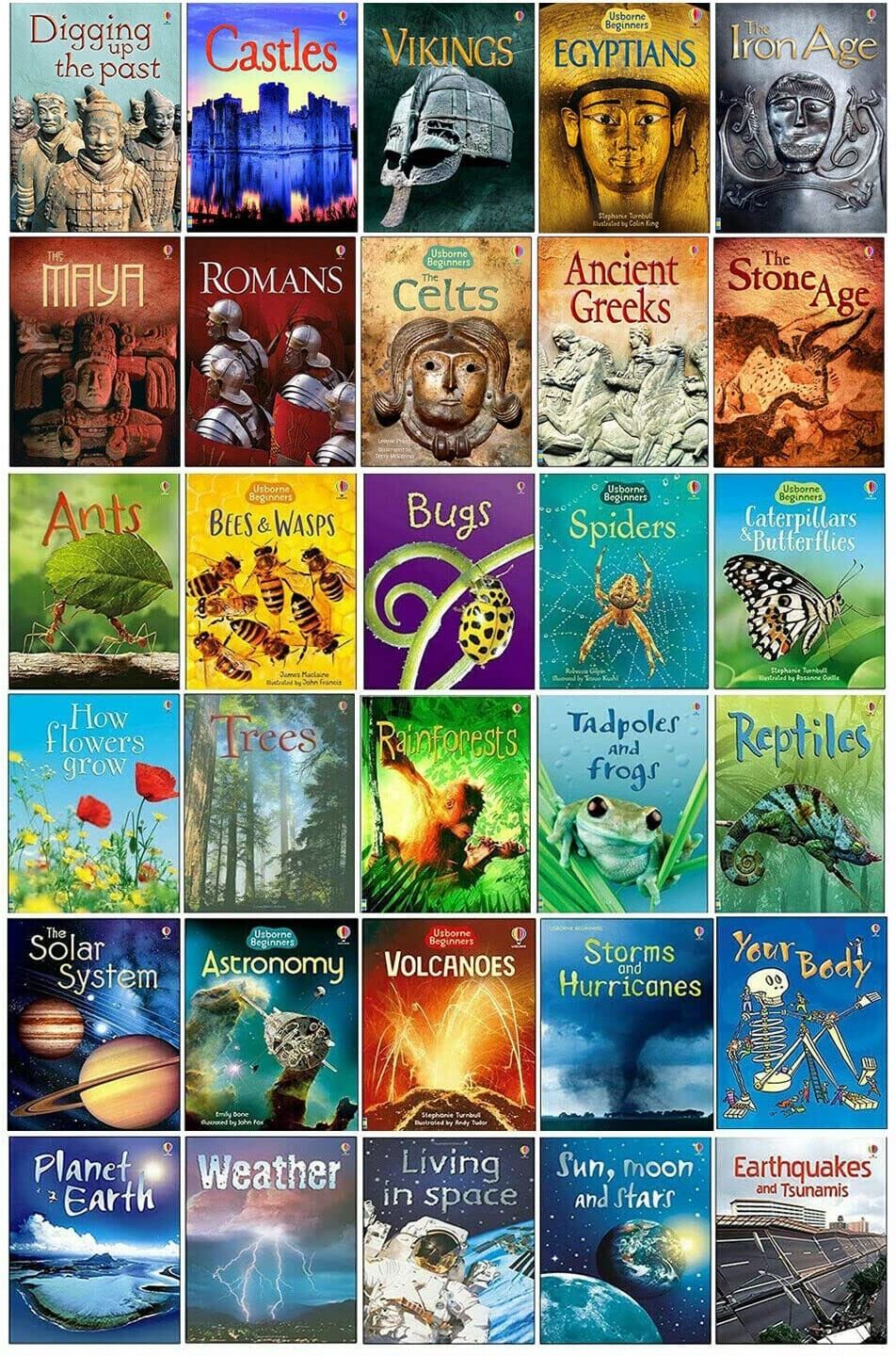
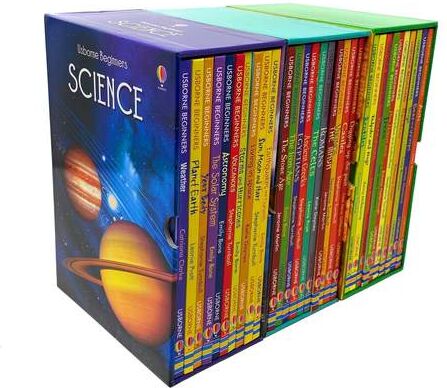
Usborne Beginners Series – 30 Book Collection Box Set Children’s Educational Books (History, Nature & Science) KS1 KS2Usborne Beginners Series 30 Books Collection Box Set (History- Nature- Science) Build a strong foundation in knowledge and reading with the Usborne Beginners Series – 30 Books Collection Box Set, published by Usborne. This comprehensive educational collection introduces children to a wide range of topics across history, science, and nature, using clear language, engaging illustrations, and structured layouts designed for young learners. Perfectly suited for KS1 and KS2 pupils, these books support both curriculum learning and independent reading. From natural disasters and wildlife to historical events and scientific discoveries, the series encourages curiosity, critical thinking, and a love of learning. Description Titles in this set: History Stone Age Iron Age Egyptians Ancient Greeks Celts Romans The Maya Vikings Castles Digging Up the Past Nature Reptiles Tadpoles and Frogs Rainforest Trees How Flowers Grow Caterpillars and Butterflies Spiders Bugs Bees & Wasps Ants Science Earthquakes & Tsunamis Sun Moon and Stars Living in Space Storms and Hurricanes Volcanoes Astronomy The Solar System Your Body Planet Earth Weather Related Tags: Usborne, Usbourne42,75 £*Shipping: 0,00 £Secure redirect to the provider
-
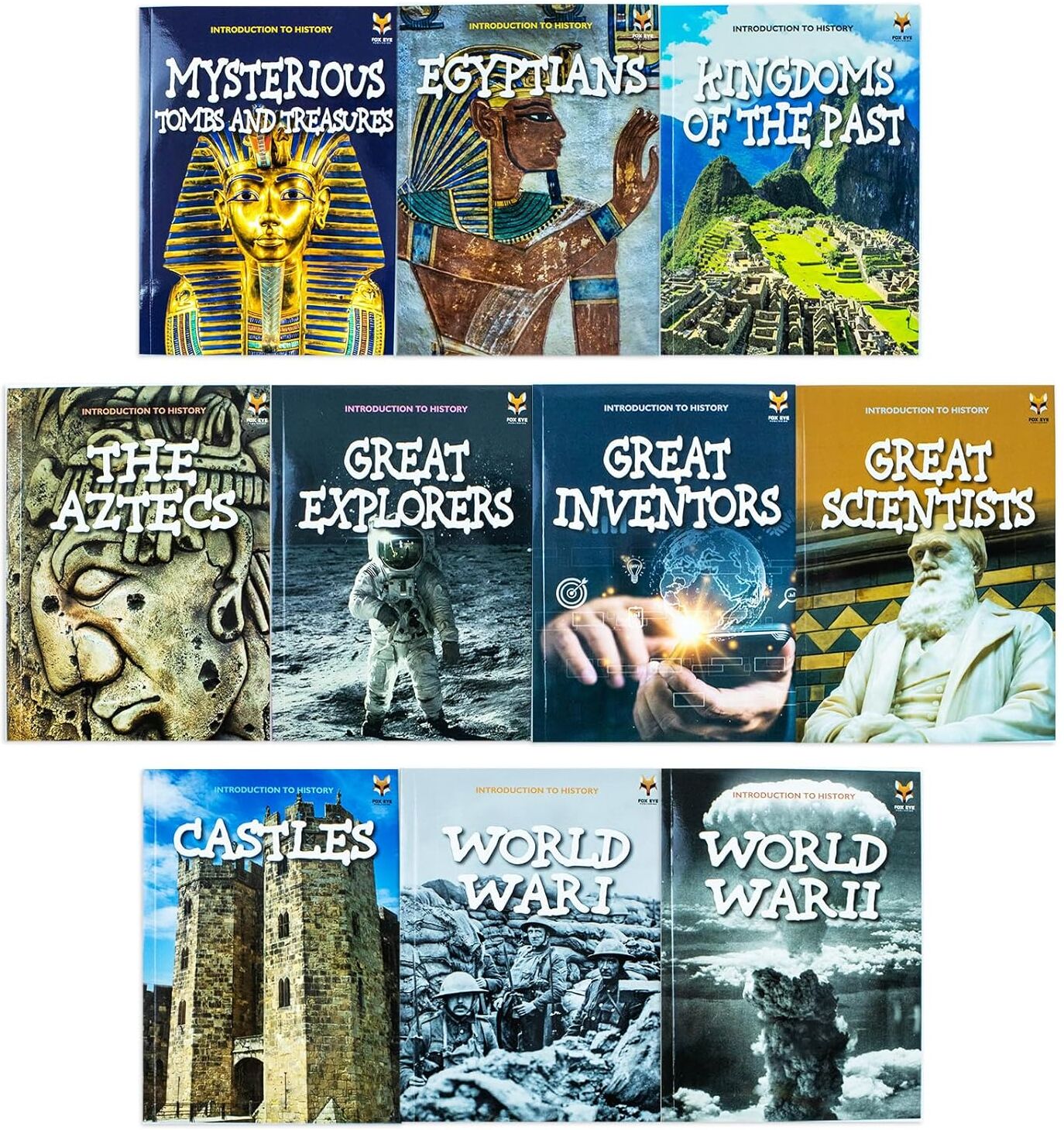
Fox Eye Publishing Introduction to History for Beginners Series 2 – 10 Books Collection Set – Great Explorers & Educational History Collection"Introduction to History Series 2" comprises a captivating 10-book set delving into pivotal periods, figures, and events that shaped our world. Each book is a gateway to a distinct facet of history, inviting readers to embark on an enriching journey through time. Introduction to Great Explorers: Who were history’s great explorers and where did they travel? Find out inside. Introduction to Great Inventors: Who were history’s great inventors and what did they invent? Find out inside. Introduction to Great Scientists: Who were history’s great scientists and what did they discover? Find out inside. Introduction to Castles: Castles were amazing buildings that were home to many people. Find out all about castles and what life was like inside them. Introduction to Kingdoms of the Past: What were the great kingdoms of the past and who ruled them? Find out inside. Introduction to Mysterious Tombs and Treasures: What are mysterious tombs and treasures and where can they be found? Find out inside. Egyptians: The ancient Egyptians were clever farmers and brilliant builders. Find out more about them and their amazing way of life inside. The Aztecs : The Aztecs were terrifying warriors and brilliant builders. Find out more about them and their amazing life way of life inside. Introduction to World War I: What was World War I and why did it happen? Find out about the war inside. Introduction to World War II: What was World War II and why did it happen? Find out about the war inside. This 10-book set is a gateway to diverse epochs, offering a panoramic view of humanity's past, each volume inviting readers to explore, learn, and appreciate the rich tapestry of history that has shaped our world.9,99 £*Shipping: 2,99 £Secure redirect to the provider

-
What are the 10 most important events/aspects of world history?
Determining the 10 most important events/aspects of world history is subjective and can vary depending on perspective. However, some key events/aspects that are often considered significant include the rise and fall of civilizations such as Ancient Egypt, Greece, and Rome; the spread of religions like Christianity and Islam; the Age of Exploration and colonization; the Industrial Revolution; the World Wars; the Cold War; the Civil Rights Movement; the fall of the Berlin Wall and the end of the Soviet Union; and the ongoing globalization of economies and cultures. These events have had far-reaching impacts on the world and continue to shape our present-day society. **
-
Where can you view the Blue Screen history in Windows 10?
In Windows 10, you can view the Blue Screen history by going to the "Settings" menu and selecting "Update & Security." From there, click on "View update history" and then select "View your update history." This will show you a list of recent updates and any associated Blue Screen errors that may have occurred. Additionally, you can also access the Blue Screen history by navigating to the "Event Viewer" tool and looking under the "Windows Logs" section for "System" events. **
-
What is the difference between low culture and high culture in history?
Low culture refers to the cultural activities and products that are considered to be more common, popular, and easily accessible to the general public. This can include things like popular music, television shows, and mass-produced literature. On the other hand, high culture refers to the cultural activities and products that are considered to be more refined, sophisticated, and often associated with the elite or educated classes. This can include things like classical music, fine art, and literature that is considered to be more intellectually challenging. The distinction between low and high culture has been a source of debate and has evolved over time, but it generally reflects the social and class divisions within a society. **
-
Should history classes teach more about African history?
Yes, history classes should teach more about African history. African history is rich and diverse, with a long and complex history that has often been overlooked or marginalized in traditional history curriculums. By including more African history in the curriculum, students can gain a more comprehensive understanding of the world and the interconnectedness of different cultures and societies. This can also help to challenge stereotypes and misconceptions about Africa and its people, and promote a more inclusive and accurate portrayal of global history. **

Is history reported one-sidedly in history books?
History is often reported one-sidedly in history books, as they are typically written from the perspective of the dominant or victorious group. This can lead to the experiences and perspectives of marginalized or oppressed groups being overlooked or misrepresented. It is important for readers to critically analyze multiple sources and perspectives to gain a more comprehensive understanding of historical events. By seeking out diverse viewpoints and voices, a more balanced and nuanced understanding of history can be achieved. **
Is our perspective on history manipulated by history classes?
Yes, our perspective on history can be manipulated by history classes. History classes often focus on specific events, figures, and narratives that align with the dominant cultural and political perspectives of the time. This can lead to the omission or downplaying of certain perspectives, events, and voices, which can shape our understanding of history in a biased way. Additionally, the way history is taught and the materials used in history classes can also influence how we perceive and interpret historical events. It is important to critically analyze and seek out diverse sources of information to gain a more comprehensive understanding of history. **
Top-Angebote
Products related to Usborne-Beginners-History-10:
-
Usborne Publishing Ltd Usborne Beginners History & Usborne Beginners Nature 20 Books Collection Box SetTitles in this set: Usborne Beginners History Stone Age Iron Age Egyptians Ancient Greeks Celts Romans The Maya Vikings Castles Digging Up the Past. Usborne Beginners Nature Reptiles Tadpoles and Frogs Rainforest Trees How Flowers Grow Caterpillars and Butterflies Spiders Bugs Bees & Wasps Ants Description Stone Age This simple information book follows the history of Stone Age people and how they lived. Iron Age This simple information book charts the history of Iron Age people and how they lived, including their farming methods, the gods they prayed to and the hill forts where they lived. Egyptians Who were the ancient Egyptians? Why did they build pyramids and how were mummies made? Ancient Greeks Find out about Ancient Greece, what people wore, ate and did for fun and learn about some of the most famous philosophers and mathematicians of the age in this compelling book for beginner readers. Celts Who were the Celts exactly? Did you know they lived on top of hills? Do you have any idea how Celtic warriors made themselves look really scary in battle? Romans Who were the ancient Romans? Where did they go to eat, shop and wash? What did they do for fun? The Maya Who were the Maya? Where did they live? Why did they build tall stone temples? Vikings Find out what it was like to be a Viking, and learn about Viking homes, feasts, boats, gods and much more in this fascinating book. Castles Who lived in a castle, and what was it like? Children can find out the answers to these questions and lots more about the wonderful world of castles in this informative book. Digging Up the Past How do ancient things get buried? Who digs them up? And what do they find? Beginner readers can find answers to these questions and more in this colourful information book. Reptiles This is a fantastic brand new addition to the "Beginners" series, designed to provide an informative introduction to trees and plant-life for young readers. Tadpoles and Frogs Vivid, full colour illustrations and photographs on every page, accompanied by short, informative text. Rainforest It offers a terrific reading practice for children who prefer fact to fiction. It is developed with a reading expert from Roehampton University to help young readers grow in confidence. Trees This is a fantastic brand new addition to the 'Beginners' series, designed to provide an informative introduction to trees and plant-life for young readers. How Flowers Grow How do flowers grow in dry deserts? How do animals help to spread seeds? Which flower smells like rottng meat? Caterpillars and Butterflies Usborne Beginners are colourful information books for children beginning to read on their own. Spiders Usborne Beginners are colourful information books for children beginning to read on their own. Bugs Usborne Beginners are colourful information books for children beginning to read on their own. Bees & Wasps A slim and unintimidating book which belies its contents - a wealth of information, much of which will be...34,99 £*Shipping: 2,99 £Secure redirect to the provider
-
Usborne Beginners Nature, Science & History Collection 30 Books Set - Ages 4-10 - Paperback Usborne Publishing LtdTitles in This Set: Usborne Beginners Nature 10 Books: 1. Ants 2. Bees & Wasps 3. Bugs 4. Spiders 5. Tadpoles and Frogs 6. Caterpillars and Butterflies 7. How Flowers Grow 8. Trees 9. Rainforest 10. Reptiles Usborne Beginners Science 10 Books: 1. Earthquakes & Tsunamis 2. Sun Moon and Stars 3. Living in Space 4. Storms and Hurricanes 5. Volcanoes 6. Astronomy 7. The Solar System 8. Your Body 9. Planet Earth 10. Weather Usborne Beginners History 10 Books: Titles in This Set: 1. Ancient Greeks 2. Castles 3. Celts 4. Digging Up the Past 5. Egyptians 6. Iron Age 7. Maya 8. Romans 9. Stone Age 10. Vikings Description : Usborne Beginners Nature 10 Books Ants Where do ants live? What do they eat? How much weight can they carry? Little children can find out the answers to these questions and much more in this simple introduction to the world of ants. Bees & Wasps What do bees and wasps eat? What type of nests do they make? How do bees make honey? Find out the answers and lots more in this intriguing introduction to the fascinating world of bees and wasps. Bugs ''There are all kinds of different bugs. Some can jump up high. Other bugs have lots of legs.” Bugs is part of an exciting reading series for young children, with lots of pictures and very simple text. Spiders “Spiders have eight legs. Most of them have eight eyes, but some of them can’t see very well.” Learn all about spiders in this great book for children learning to read by themselves. Tadpoles and Frogs From egg to frog, find out about the entire life cycle of a frog in this easy-to-read fully illustrated book for young learners ages 4+. It comes complete with weblinks so you can see the process for yourself. Caterpillars and Butterflies A beautifully illustrated introduction to the life of butterflies and caterpillars, with easy to read text for beginner readers. The life cycle of a butterfly is shown with stunning photographs and illustrations, and there are links to carefully selected websites with videos that show butterflies emerging from their pupae. How Flowers Grow How do flowers grow in dry deserts? How do animals help to spread seeds? Which flower smells like rotting meat? Find out in this great book for young readers ages four and up. Trees How do trees use their leaves to make food? Why do they grow flowers and fruit? Which animals live inside a tree trunk and build nests in its branches? How can we help to protect trees? This book has all the answers and much more, along with photographs, step-by-step illustrations, simple text and links to websites with video clips and activities. Rainforests Learn all about the rainforest in this fantastic easy-to-read book for children 4+ beginning to strike out on their own. From towering trees to rainforest rivers, this fully-illustrated book also features links to carefully selected websites. Reptiles Learn all about the lizard world in this fully-illustrated guide, the latest in the Usborne Beginners series. From scaly skin to tongue tricks...42,75 £*Shipping: 0,00 £Secure redirect to the provider
-
Usborne Beginners History 10 Books Collection Set - Ages 4-7 - Paperback Usborne Publishing LtdSummary Usborne Beginners History is a top value collection containing ten easy-to-read books about the people and places of the past. Every page is packed with full-colour illustrations and is written specifically for children aged 5-7 learning to read. It’s developed in consultation with reading experts, so you can be confident that these books are suitable for your kid. History is one of the most fascinating subjects, but it can also be hard to get into. It’s not just about dates and battles; history is full of everyday people who did extraordinary things. Even though we know that history isn’t dull, sometimes it can seem a little too big or complicated to enjoy learning about. Usborne Beginners History is a fantastic collection that brings together exciting stories in an easy-to-understand way with lots of fun illustrations on every page. They've been specially designed for children who want to find out more about the past without having to read long chapters or heavy books. Your child will love exploring history through these fun, easy-to-read books. They’ll learn about famous figures from the past, how life used to be lived long ago, what happened at different times in history – all while they develop their reading skills. There are even glossaries at the back of each book so you can make sure you’ve learnt all the new vocabulary correctly. It’s another wonderful product from the trusted children’s publisher Usborne. If you’re looking for more non-fiction to add to your collection at home, make sure to check out our full Usborne Beginners range for books on nature, science and more everyday topics. If it’s fiction you’re after, make sure you look at the Usborne Reading Programme, which is designed to help kids grow from reading simple stories to more complex narratives. What’s in the collection? There are an incredible ten books included, written by a combination of Usborne’s regular authors. They cover a wide range of periods, from the Stone Age up to Medieval times. They also cover African, European and Central American civilisations for the most comprehensive overview. In Ancient Greeks, you can find out more about Greek gods and heroes, what Greeks liked to do for fun, and all about their favourite foods. You can find out all about Castles, the people who lived in them, and why they stand in ruins. Discover how The Celts were fighters, craftspeople, and tale-tellers. Digging Up the Past shows how history is uncovered, a shovel and a trowel at a time. Learn how the Egyptians made mummies, buried their treasure under pyramids, and farmed on the banks of the River Nile. Find out how people lived, died, created and worshipped in The Iron Age. Journey to Central America to meet The Maya, who built towering temples, lived in stone cities and fought in the jungle. Uncover how the Romans built the modern world but lived and worshipped very differently from us. The Stone Age rocks! Learn all about farming, tools, making shelters, and catching...14,99 £*Shipping: 2,99 £Secure redirect to the provider
-
Usborne Beginners History 10 Books Collection Box Set Educational History Books for Children - Stone Age Iron Age - HARDCOVERUsborne Beginners History 10 Books Collection Box Set Stone Age Iron Age Egyptians Ancient Greeks .. Stone Age This simple information book follows the history of Stone Age people and how they lived. Iron Age This simple information book charts the history of Iron Age people and how they lived; including their farming methods; the gods they prayed to and the hill forts where they lived. Egyptians Who were the ancient Egyptians? Why did they build pyramids and how were mummies made? Ancient Greeks Find out about Ancient Greece; what people wore; ate and did for fun and learn about some of the most famous philosophers and mathematicians of the age in this compelling book for beginner readers. Celts Who were the Celts exactly? Did you know they lived on top of hills? Do you have any idea how Celtic warriors made themselves look really scary in battle? Romans Who were the ancient Romans? Where did they go to eat; shop and wash? What did they do for fun? The Maya Who were the Maya? Where did they live? Why did they build tall stone temples? Vikings Find out what it was like to be a Viking; and learn about Viking homes; feasts; boats; gods and much more in this fascinating book. Castles Who lived in a castle; and what was it like? Children can find out the answers to these questions and lots more about the wonderful world of castles in this informative book. Digging Up the Past How do ancient things get buried? Who digs them up? And what do they find? Beginner readers can find answers to these questions and more in this colourful information book. Related Tags: Usborne, Usbourne14,99 £*Shipping: 2,99 £Secure redirect to the provider
-
What are electricity and high culture history?
Electricity history refers to the development and use of electricity as a form of energy, including the discovery of electricity, the invention of electric devices, and the establishment of electrical systems. High culture history, on the other hand, refers to the history of cultural and artistic achievements that are considered to be of high quality and sophistication, such as classical music, literature, fine arts, and theater. Both electricity and high culture history have evolved over time, shaping the way we live and appreciate the world around us. **
-
What is the constructive nature of history?
The constructive nature of history refers to the way in which our understanding and interpretation of historical events and figures can shape our present and future. By studying history, we can learn from past mistakes and successes, and use that knowledge to build a better future. History also helps us understand the complexities of human societies and the interconnectedness of different cultures and civilizations. Ultimately, the constructive nature of history lies in its ability to provide valuable lessons and insights that can inform our decisions and actions in the present and future. **
-
What are the 10 most important events/aspects of world history?
Determining the 10 most important events/aspects of world history is subjective and can vary depending on perspective. However, some key events/aspects that are often considered significant include the rise and fall of civilizations such as Ancient Egypt, Greece, and Rome; the spread of religions like Christianity and Islam; the Age of Exploration and colonization; the Industrial Revolution; the World Wars; the Cold War; the Civil Rights Movement; the fall of the Berlin Wall and the end of the Soviet Union; and the ongoing globalization of economies and cultures. These events have had far-reaching impacts on the world and continue to shape our present-day society. **
-
Where can you view the Blue Screen history in Windows 10?
In Windows 10, you can view the Blue Screen history by going to the "Settings" menu and selecting "Update & Security." From there, click on "View update history" and then select "View your update history." This will show you a list of recent updates and any associated Blue Screen errors that may have occurred. Additionally, you can also access the Blue Screen history by navigating to the "Event Viewer" tool and looking under the "Windows Logs" section for "System" events. **
Similar search terms for Usborne-Beginners-History-10
-
Usborne Beginners Series – 30 Book Collection Box Set Children’s Educational Books (History, Nature & Science) KS1 KS2Usborne Beginners Series 30 Books Collection Box Set (History- Nature- Science) Build a strong foundation in knowledge and reading with the Usborne Beginners Series – 30 Books Collection Box Set, published by Usborne. This comprehensive educational collection introduces children to a wide range of topics across history, science, and nature, using clear language, engaging illustrations, and structured layouts designed for young learners. Perfectly suited for KS1 and KS2 pupils, these books support both curriculum learning and independent reading. From natural disasters and wildlife to historical events and scientific discoveries, the series encourages curiosity, critical thinking, and a love of learning. Description Titles in this set: History Stone Age Iron Age Egyptians Ancient Greeks Celts Romans The Maya Vikings Castles Digging Up the Past Nature Reptiles Tadpoles and Frogs Rainforest Trees How Flowers Grow Caterpillars and Butterflies Spiders Bugs Bees & Wasps Ants Science Earthquakes & Tsunamis Sun Moon and Stars Living in Space Storms and Hurricanes Volcanoes Astronomy The Solar System Your Body Planet Earth Weather Related Tags: Usborne, Usbourne42,75 £*Shipping: 0,00 £Secure redirect to the provider
-
Fox Eye Publishing Introduction to History for Beginners Series 2 – 10 Books Collection Set – Great Explorers & Educational History Collection"Introduction to History Series 2" comprises a captivating 10-book set delving into pivotal periods, figures, and events that shaped our world. Each book is a gateway to a distinct facet of history, inviting readers to embark on an enriching journey through time. Introduction to Great Explorers: Who were history’s great explorers and where did they travel? Find out inside. Introduction to Great Inventors: Who were history’s great inventors and what did they invent? Find out inside. Introduction to Great Scientists: Who were history’s great scientists and what did they discover? Find out inside. Introduction to Castles: Castles were amazing buildings that were home to many people. Find out all about castles and what life was like inside them. Introduction to Kingdoms of the Past: What were the great kingdoms of the past and who ruled them? Find out inside. Introduction to Mysterious Tombs and Treasures: What are mysterious tombs and treasures and where can they be found? Find out inside. Egyptians: The ancient Egyptians were clever farmers and brilliant builders. Find out more about them and their amazing way of life inside. The Aztecs : The Aztecs were terrifying warriors and brilliant builders. Find out more about them and their amazing life way of life inside. Introduction to World War I: What was World War I and why did it happen? Find out about the war inside. Introduction to World War II: What was World War II and why did it happen? Find out about the war inside. This 10-book set is a gateway to diverse epochs, offering a panoramic view of humanity's past, each volume inviting readers to explore, learn, and appreciate the rich tapestry of history that has shaped our world.9,99 £*Shipping: 2,99 £Secure redirect to the provider
-
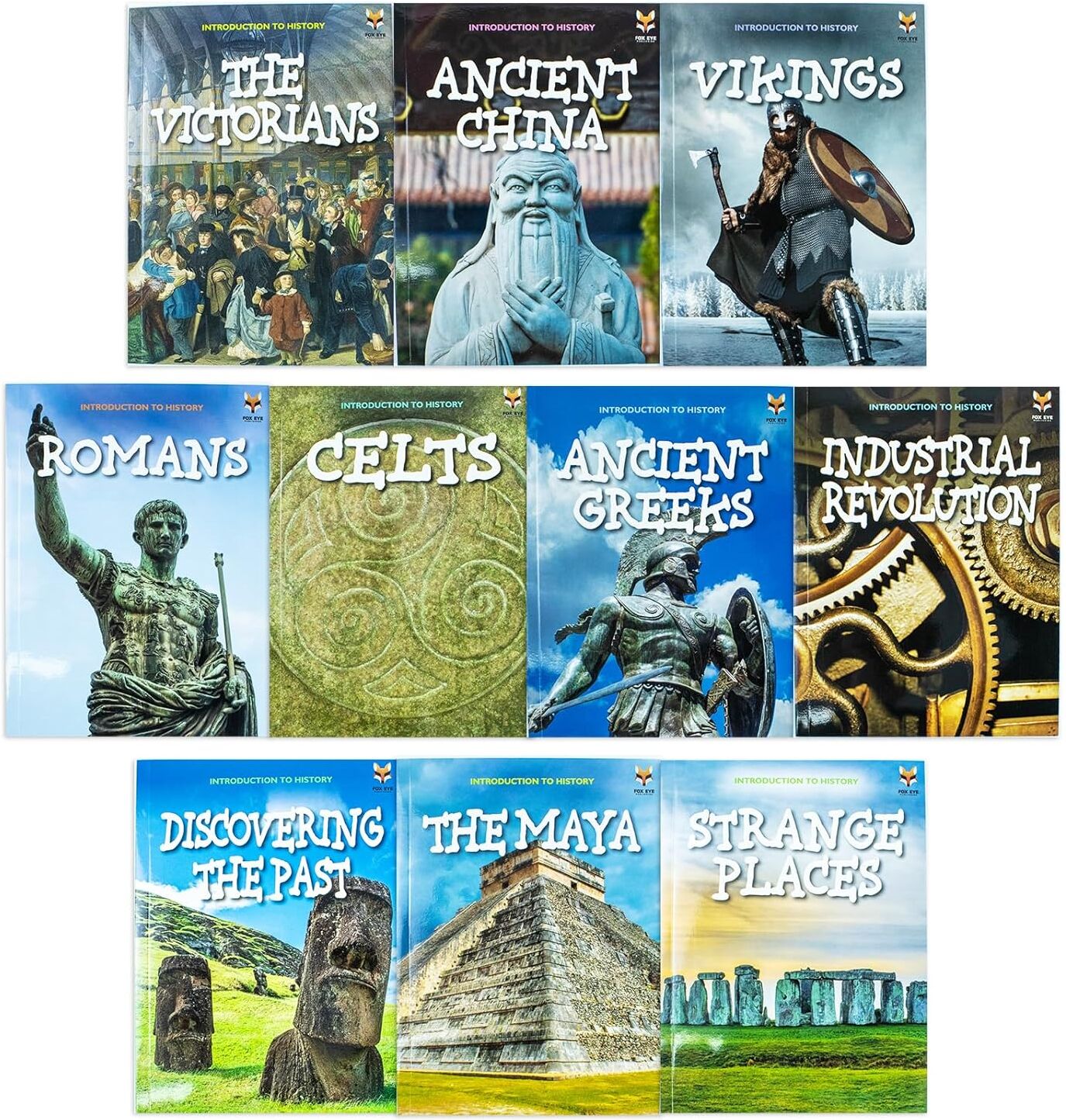
Fox Eye Publishing Introduction to History for Beginners Series 1 – 10 Books Collection Set – Ancient China, Celts & Educational History Collection"Introduction to History Series 1" comprises a captivating 10-book set delving into pivotal periods, figures, and events that shaped our world. Each book is a gateway to a distinct facet of history, inviting readers to embark on an enriching journey through time. Introduction to Ancient China: The ancient Chinese were clever inventors and fearsome fighters. Find out more about them and their amazing way of life inside. Introduction to Industrial Revolution: What was the Industrial Revolution and why did it happen? Find out inside. Introduction to Strange Places: What are strange places and what have we learnt about them? Find out inside. Introduction to Celts: The Celts were fearsome warriors and clever craftspeople. Find out more about them and their amazing way of life inside. Introduction to Discovering the Past: The past is full of wonder, and we can discover it by digging it up! Find out all about past people and how we learn about them inside. Introduction to Ancient Greeks: The ancient Greeks were clever thinkers and master builders. Find out more about them and their amazing way of life inside. Introduction to The Maya: The Maya were fierce fighters and master mathematicians. Find out more about them and their amazing way of life inside. Introduction to Romans: The Romans built an incredible empire that conquered much of the world. Find out more about them and their amazing way of life inside. Introduction to Vikings: The Vikings were fierce fighters and great explorers. Find out more about them and their amazing way of life inside. Introduction to The Victorians: Who were the Victorians and how did they change history? Find out inside. Each book in this set offers a captivating glimpse into a different facet of history, providing a comprehensive introduction to these diverse and intriguing civilizations and eras.9,99 £*Shipping: 2,99 £Secure redirect to the provider
-
Usborne Beginners Nature 10 Books Children Collection - Ages 4-7- Paperback Usborne Publishing LtdTitles in This Set : 1. Ants 2. Bees & Wasps 3. Bugs 4. Spiders 5. Tadpoles and Frogs 6. Caterpillars and Butterflies 7. How Flowers Grow 8. Trees 9. Rainforest 10. Reptiles Description : Ants Where do ants live? What do they eat? How much weight can they carry? Little children can find out the answers to these questions and much more in this simple introduction to the world of ants. Bees & Wasps What do bees and wasps eat? What type of nests do they make? How do bees make honey? Find out the answers and lots more in this intriguing introduction to the fascinating world of bees and wasps. Bugs ''There are all kinds of different bugs. Some can jump up high. Other bugs have lots of legs.” Bugs is part of an exciting reading series for young children, with lots of pictures and very simple text. Spiders “Spiders have eight legs. Most of them have eight eyes, but some of them can’t see very well.” Learn all about spiders in this great book for children learning to read by themselves. Tadpoles and Frogs From egg to frog, find out about the entire life cycle of a frog in this easy-to-read fully illustrated book for young learners ages 4+. It comes complete with weblinks so you can see the process for yourself. Caterpillars and Butterflies A beautifully illustrated introduction to the life of butterflies and caterpillars, with easy to read text for beginner readers. The life cycle of a butterfly is shown with stunning photographs and illustrations, and there are links to carefully selected websites with videos that show butterflies emerging from their pupae. How Flowers Grow How do flowers grow in dry deserts? How do animals help to spread seeds? Which flower smells like rotting meat? Find out in this great book for young readers ages four and up. Trees How do trees use their leaves to make food? Why do they grow flowers and fruit? Which animals live inside a tree trunk and build nests in its branches? How can we help to protect trees? This book has all the answers and much more, along with photographs, step-by-step illustrations, simple text and links to websites with video clips and activities. Rainforests Learn all about the rainforest in this fantastic easy-to-read book for children 4+ beginning to strike out on their own. From towering trees to rainforest rivers, this fully-illustrated book also features links to carefully selected websites. Reptiles Learn all about the lizard world in this fully-illustrated guide, the latest in the Usborne Beginners series. From scaly skin to tongue tricks, this book for readers beginning to read on their own comes with carefully selected weblinks so you can see them in action.12,99 £*Shipping: 2,99 £Secure redirect to the provider
-
What is the difference between low culture and high culture in history?
Low culture refers to the cultural activities and products that are considered to be more common, popular, and easily accessible to the general public. This can include things like popular music, television shows, and mass-produced literature. On the other hand, high culture refers to the cultural activities and products that are considered to be more refined, sophisticated, and often associated with the elite or educated classes. This can include things like classical music, fine art, and literature that is considered to be more intellectually challenging. The distinction between low and high culture has been a source of debate and has evolved over time, but it generally reflects the social and class divisions within a society. **
-
Should history classes teach more about African history?
Yes, history classes should teach more about African history. African history is rich and diverse, with a long and complex history that has often been overlooked or marginalized in traditional history curriculums. By including more African history in the curriculum, students can gain a more comprehensive understanding of the world and the interconnectedness of different cultures and societies. This can also help to challenge stereotypes and misconceptions about Africa and its people, and promote a more inclusive and accurate portrayal of global history. **
-
Is history reported one-sidedly in history books?
History is often reported one-sidedly in history books, as they are typically written from the perspective of the dominant or victorious group. This can lead to the experiences and perspectives of marginalized or oppressed groups being overlooked or misrepresented. It is important for readers to critically analyze multiple sources and perspectives to gain a more comprehensive understanding of historical events. By seeking out diverse viewpoints and voices, a more balanced and nuanced understanding of history can be achieved. **
-
Is our perspective on history manipulated by history classes?
Yes, our perspective on history can be manipulated by history classes. History classes often focus on specific events, figures, and narratives that align with the dominant cultural and political perspectives of the time. This can lead to the omission or downplaying of certain perspectives, events, and voices, which can shape our understanding of history in a biased way. Additionally, the way history is taught and the materials used in history classes can also influence how we perceive and interpret historical events. It is important to critically analyze and seek out diverse sources of information to gain a more comprehensive understanding of history. **
* All prices are inclusive of VAT and, if applicable, plus shipping costs. The offer information is based on the details provided by the respective shop and is updated through automated processes. Real-time updates do not occur, so deviations can occur in individual cases. ** Note: Parts of this content were created by AI.